What If You Could Stop Working 10 Years Earlier?
The maths of living abroad don't just mean a cheaper life. They mean you might not need a salary at all. And that changes everything.

Most people I talk to assume they'll work until 65 or 67. Not because they want to, but because the numbers demand it. The mortgage, the bills, the council tax, the car, the food shop that keeps creeping up. The salary covers the life, and the life requires the salary. It's a loop, and after a few decades it starts to feel permanent.
But what if the loop is optional?
Not in a reckless, sell-everything, burn-the-boats way. In a practical, run-the-numbers, what-would-actually-happen way. Because when you look at what life costs in certain parts of the world compared to the UK, the gap isn't marginal. It's big enough to change the entire calculation of when you need to stop earning.
The Simple Maths
In the UK, a modest but comfortable life for one person, renting a place, food, transport, utilities, the occasional meal out, costs somewhere around £2,000 to £2,500 a month depending on where you live. That's £24,000 to £30,000 a year. To sustain that without working, you need savings or pension income that can cover it indefinitely. For most people, that means working well into their 60s.
Now consider a different set of numbers. When I tracked every expense for a month in Vlorë, Albania, my total came to £1,200. That included a seafront apartment, fresh food from the market, cafes, eating out, transport, everything. Not a stripped-back existence. A good life, arguably a better daily life than I had in the UK.
At £1,200 a month, your annual cost of living is around £14,400. That's much less than what it costs in the UK. Which means your savings last much longer. Your pension, whenever it kicks in, covers more. And the threshold to "enough" drops dramatically. The rental is based on short-term rates but the maths gets even better with a longer lease.
The question isn't whether you can afford to live abroad. It's whether you can afford not to look at the numbers.
It's Not Just About Spending Less

If this were only about cutting costs, it would feel like downgrading. The reason it works is that the quality of life often goes up at the same time the spending goes down.
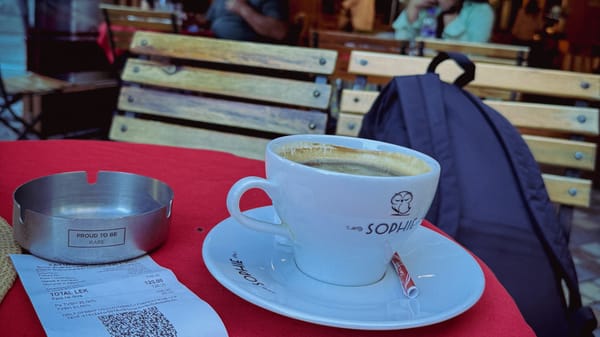
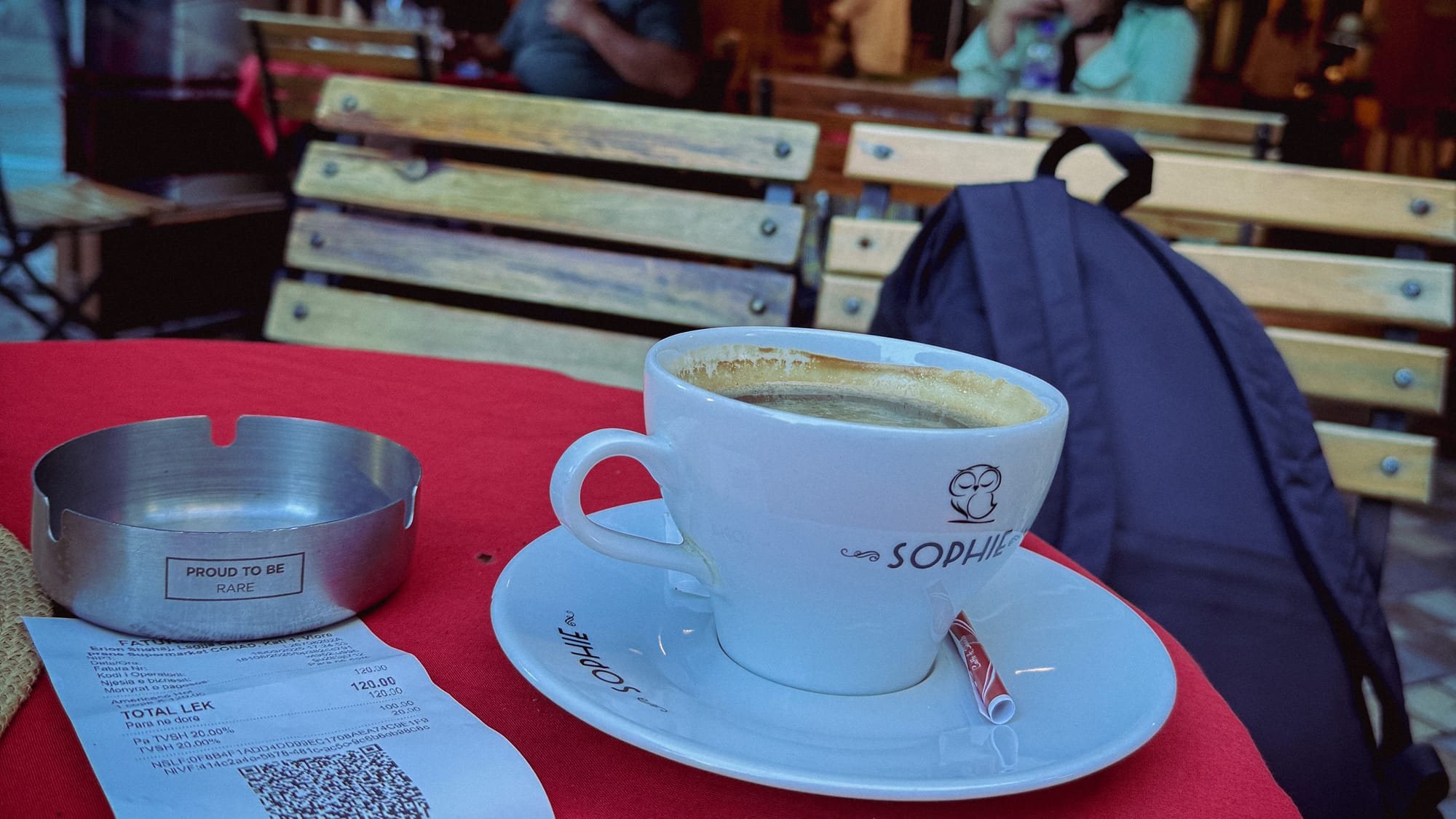
In Vlorë, I cooked with fresh market produce that would cost three times as much in a British supermarket. I sat in cafes for an hour with a coffee that cost under £1 and nobody expected me to leave. I walked along a seafront promenade every morning. I ate well, lived in a proper apartment, and had time. That last part is the one people underestimate.
In Thailand I'm doing something similar but eating out almost twice a day for even less.
There's something about living leaner that creates its own kind of richness. When you strip away the subscriptions, the convenience spending, the stuff you buy but barely use, what's left is a more intentional way of living. You notice the food because you chose it from a stall that morning. You appreciate the coffee because you're sitting with it, not rushing past it. The spending goes down and the appreciation goes up. They're not separate things.
This isn't unique to Albania. Parts of Southeast Asia and Eastern Europe offer similar arithmetic. Thailand, Vietnam, Malaysia: the specific location matters less than the principle. When your cost of living drops far enough, the entire relationship between money and time changes.
The Work Question

Here's where it gets interesting for anyone over 50 who's starting to wonder what comes next.
When you don't need a full salary to cover your life, something shifts. You stop needing to earn and start being free to work on things that actually interest you. An online project. A creative pursuit. A small business built around something you care about rather than something that pays the bills.
I don't consider what I do now to be work in the way I used to understand the word. I spend my time on projects I'm genuinely drawn to: building things, creating content, exploring ideas. These will likely generate income.
I'm going deep building systems and things with AI. In my job I would not have had that opportunity. The point is that the pressure is off. When your monthly costs are £1,200 instead of £2,500, the financial bar for a project to be "viable" drops to a level where you can actually try things without the risk feeling catastrophic.
This is the part that the early retirement conversation usually misses. It's not about doing nothing. It's about having enough financial space to do work that matters to you, at your own pace, on your own terms. That's what being untethered actually looks like: not doing nothing, but choosing what you do. The lower cost of living isn't the destination. It's the enabler.
What Keeps People Stuck

I've spoken to plenty of people who know the numbers. They've read the blogs, watched the videos, compared the costs. They understand that life abroad could work. And they stay exactly where they are.
The reasons vary. I fully accept that some have family ties and relationships: they simply cannot do what I'm doing.
However for others it's possible. A pattern runs through most of them. It's not the money. It's the familiarity.
A life that isn't working still feels known. The routine, the commute, the house, the pub, the same conversations. It's uncomfortable, but it's yours. The alternative, even when it looks better on paper, requires stepping into something unfamiliar. New language, new systems, new social dynamics, new everything. Insecurity.
For people who've spent 30 years building a life in one place, that step feels way bigger than it probably is.
Too many people stay in situations that have stopped serving them, not because they can't leave, but because the familiar feels safer than the unknown. There's no judgement in that. It's human. But it's worth naming, because once you see it clearly, it starts to loosen its grip.
Running Your Own Numbers
This isn't a one-size-fits-all argument. Your situation is yours: dependents, health, property, pension arrangements, risk tolerance. But the framework is simple enough to sketch on the back of an envelope.
What does your current life cost per month? Be honest. Include everything.
What would a comparable life cost in a lower-cost country? Not a fantasy life, a real one. Apartment, food, health insurance, transport, daily living. Research actual costs from people who've tracked them.
How many years of living expenses do your savings cover at each cost level? This is where the gap shows up. If your savings cover 10 years in the UK, they might cover 18 or 20 somewhere else.
What income could you generate from something you enjoy? Not a salary. A project, a freelance skill, an online business, even a modest one. When your costs are low, even £500 a month from something you care about changes the picture entirely.
When does your pension kick in, and what does it cover? UK state pension is currently around £11,500 a year. In the UK, that's supplementary income. In Albania or Thailand, it's close to covering your daily expenses.
The numbers won't be identical for everyone. But for most people over 50 with some savings and a willingness to live differently, the arithmetic points in the same direction: you probably have more options than you think.
The Real Cost of Staying

There's a concept in behavioural science called loss aversion that nobody talks about in the retirement or relocation planning conversation. Everyone focuses on the risk of going: what if it doesn't work out, what if I'm lonely, what if the healthcare isn't good enough.
Nobody talks about the risk of staying.
Five more years at a desk doing work that stopped meaning something. Ten more years paying a mortgage on a house that's too big for your life now. Fifteen more years of the same routine, the same weather, the same creeping sense that time is passing and you're watching it from the same window.
That's not safety. That's a different kind of risk. And it compounds.
Where to Start
If this is sparking something, don't overthink it. You don't need to resign tomorrow or sell your house.
Start with the numbers. Track your actual UK spending for a month. Then research what the same life costs in two or three places that interest you. Not fantasy research, practical research: what does rent cost, what does food cost, what are the visa options.
Then consider a trial. A month in one of those places. Not a holiday. A test. Rent an apartment, buy groceries, sit in cafes, work on your laptop, walk the streets. See if the life fits.
I've done this in Vlorë and I plan to do the same in Thailand, Vietnam, and Malaysia over the coming months. Each place is different, but the underlying question is the same: what kind of life can you build when the financial pressure eases?
The answer, so far, has been better than I expected.
Related Reading
- What a Month in Vlorë Actually Cost Me
- Supermarket Prices in Vlorë, Albania: What Groceries Actually Cost
- I Left My Career at 58, But Retirement Was Never the Plan
- Why Vlorë, Albania Deserves to Be on Your Relocation List